



3.08 €
In Stock
4S 40A Balanced Protection PCB Board for Lithium Battery
Brand: satkit
3.08€
VAT included (Ex VAT: 2.50 €)
Limited stock
Standard delivery
Wed, Apr 29 - Fri, May 1
Express delivery
Mon, Apr 27 - Tue, Apr 28
30-day returns
Free returns within 30 days
Secure transaction


Share:
Free Delivery
Shipping from €4.99
Easy Returns
30 day return policy
Secure Payment
100% secure checkout
Quality Guarantee
Original products only
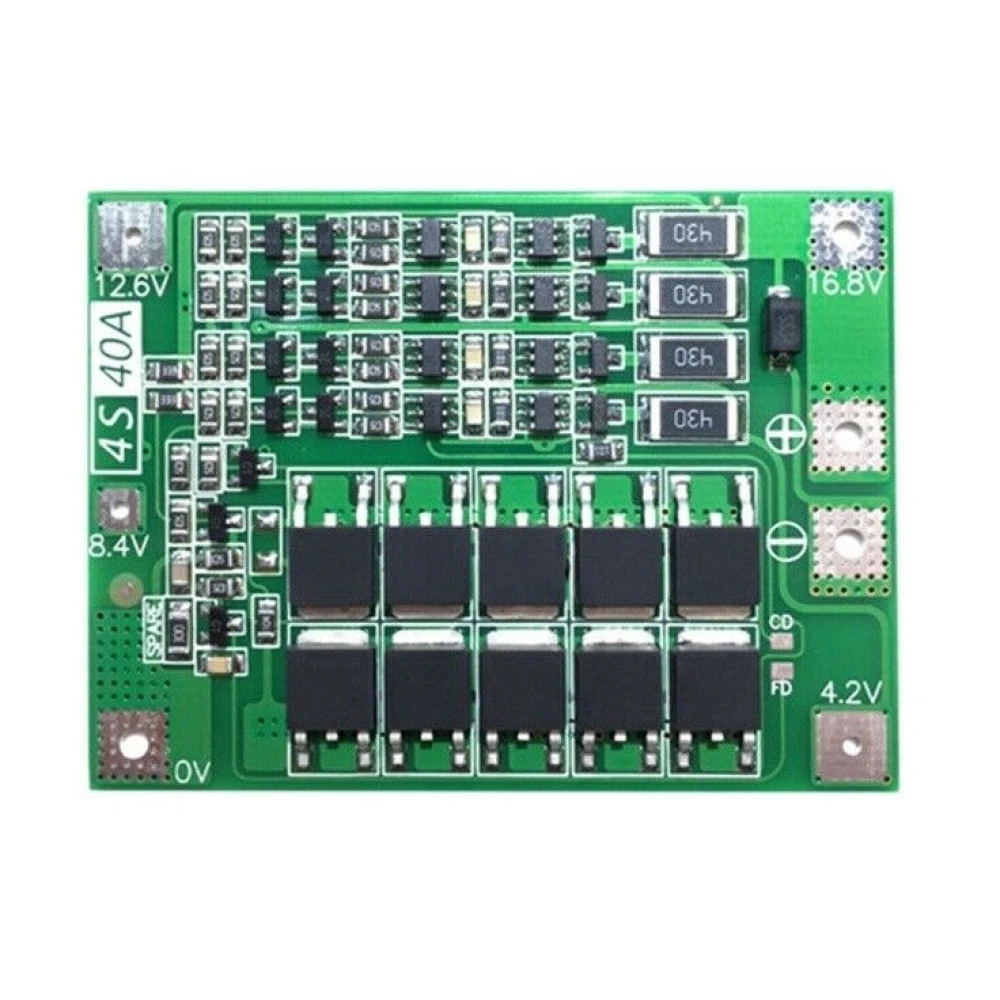
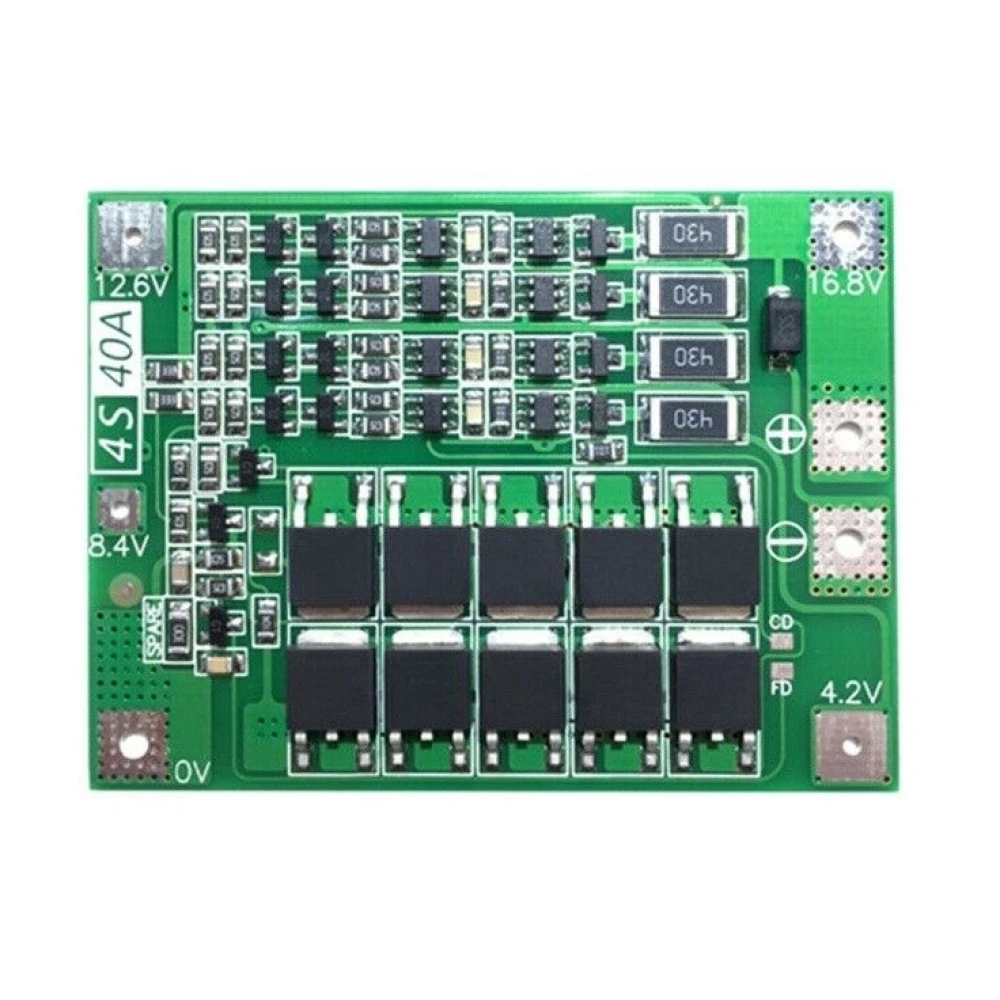
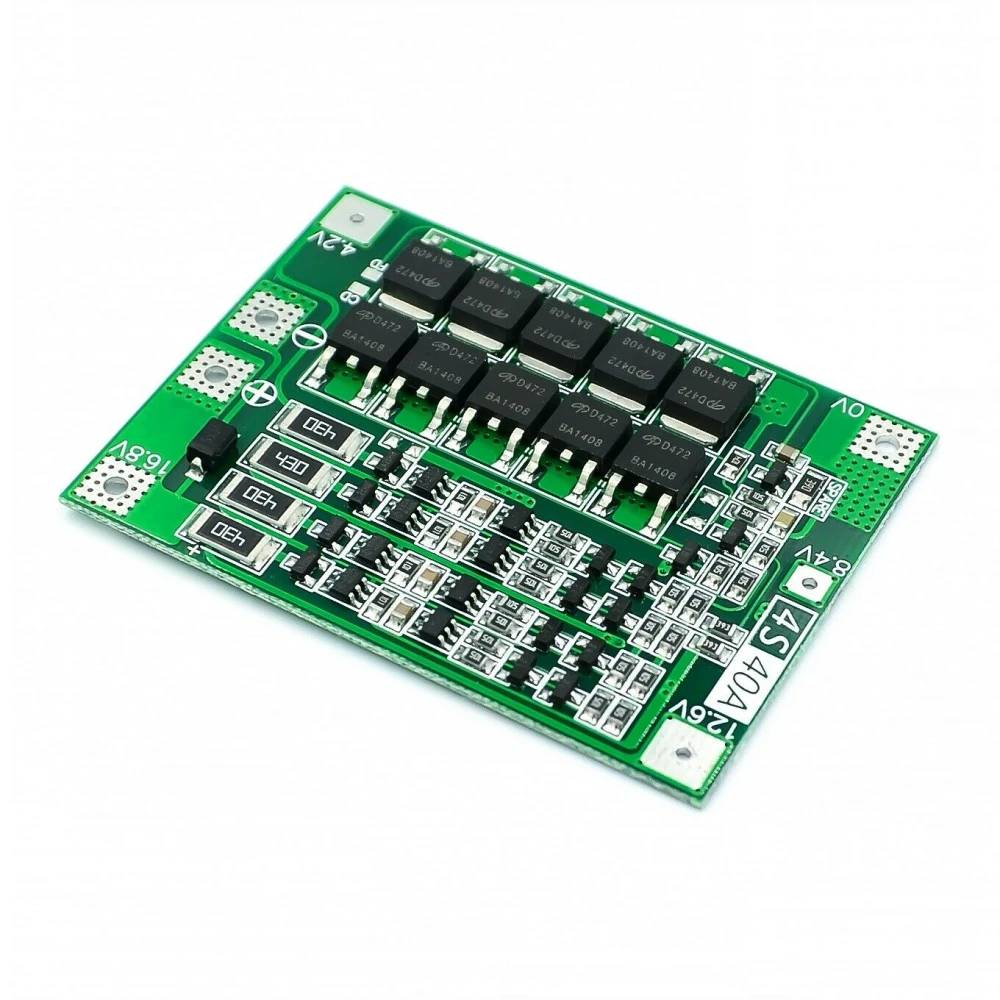
The 4S 40A lithium battery protection PCB board is an essential component for ensuring the safety and optimal performance of your lithium batteries in 4-cell series (4S) configurations. This balanced version is designed to handle high currents with effective protection, ensuring the longevity and stability of your batteries.
Main features:
- Nominal voltage: 3.6V - 3.7V per cell, compatible with 18650, 26650 and lithium polymer batteries.
- Total charging voltage: between 16.8V and 18.1V for the 4-cell pack.
- Maximum continuous discharge current: 40A, ideal for applications that require high power.
- Maximum continuous charging current: 20A, with a recommendation to reduce the current if cooling is insufficient.
- Type: Voltage regulator with balanced function to maintain the health of each cell.
- Balanced for starting currents below 80A and power below 220W.
Technical specifications and recommendations:
- Requires batteries with a discharge capacity of 15C-20C (minimum 3 batteries) or 10C-15C (minimum 6 batteries) for a successful start.
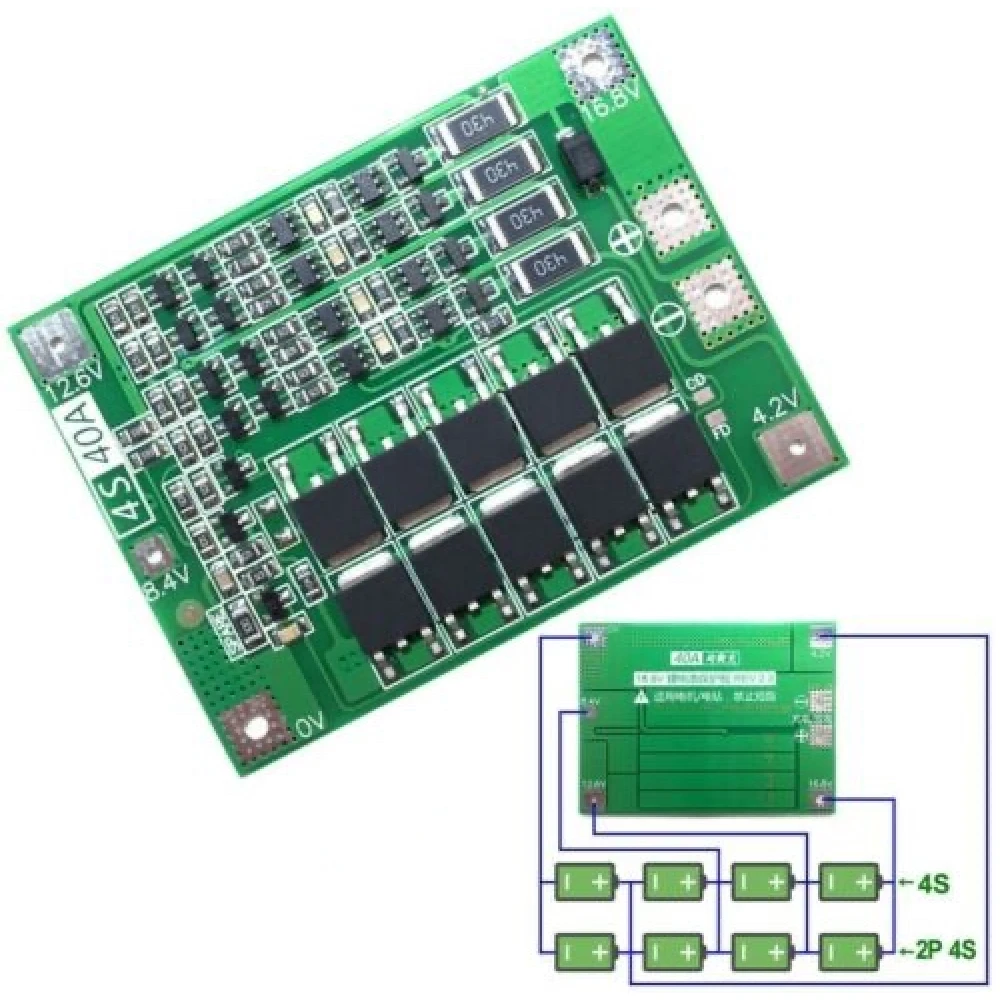
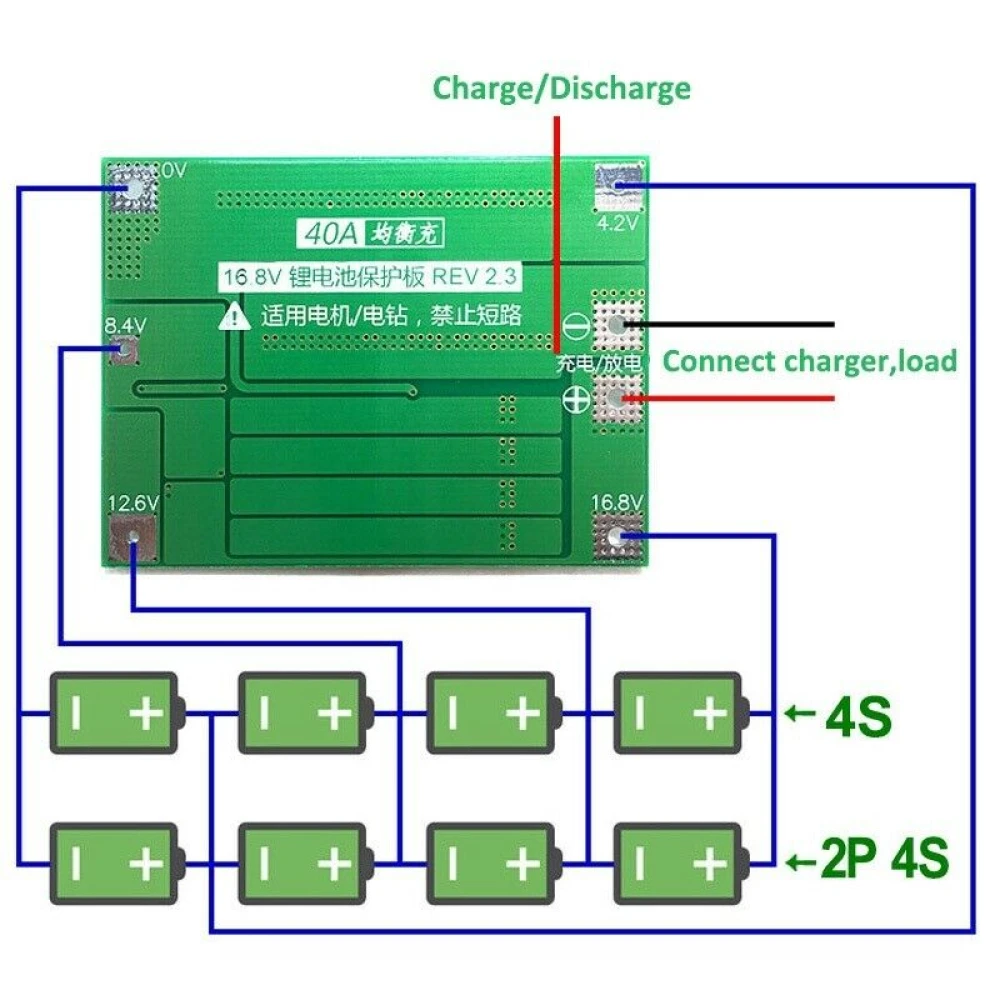
- The wiring diagram with voltage points 0V, 4.2V, 8.4V, 12.6V and 16.8V must be followed strictly to avoid short circuits.
- It is recommended to connect a non-polar capacitor (voltage >25V, capacity 10uF-100uF) between the positive and negative terminals of the motor to prevent reverse spikes during charging.
- For batteries in series, make sure each group has the same voltage; otherwise, charge each battery separately before connecting in series.
Typical uses:
This board is ideal for lithium rechargeable battery systems in applications such as electric vehicles, drones, power tools and other electronic devices that require high current and balanced protection to prevent damage from overcharging, overdischarging or cell imbalance.
Compatibility:
Compatible with 4S lithium batteries (4 cells in series) including 18650, 26650 and lithium polymer formats, provided the stated voltage and current specifications are respected.
Package contents:
- 1 x 4S 40A balanced version lithium battery protection PCB board.
- Nominal voltage 3.6V-3.7V per cell, compatible with 18650 and 26650 batteries.
- Continuous discharge current up to 40A for high power.
- Maximum continuous charging current of 20A with cooling recommended.
- Balanced version to maintain each cell’s health and prevent imbalance.
- Suitable for starting current below 80A and power under 220W.
- Requires batteries with 15C-20C or 10C-15C discharge capacity depending on quantity.
- Follow the wiring diagram to avoid short circuits.
- Recommended capacitor use to prevent reverse spikes.
- Compatible with 4S lithium batteries including lithium polymer and 18650 and 26650 formats.
Customer Questions & Answers
What are the physical dimensions and approximate weight of the board?
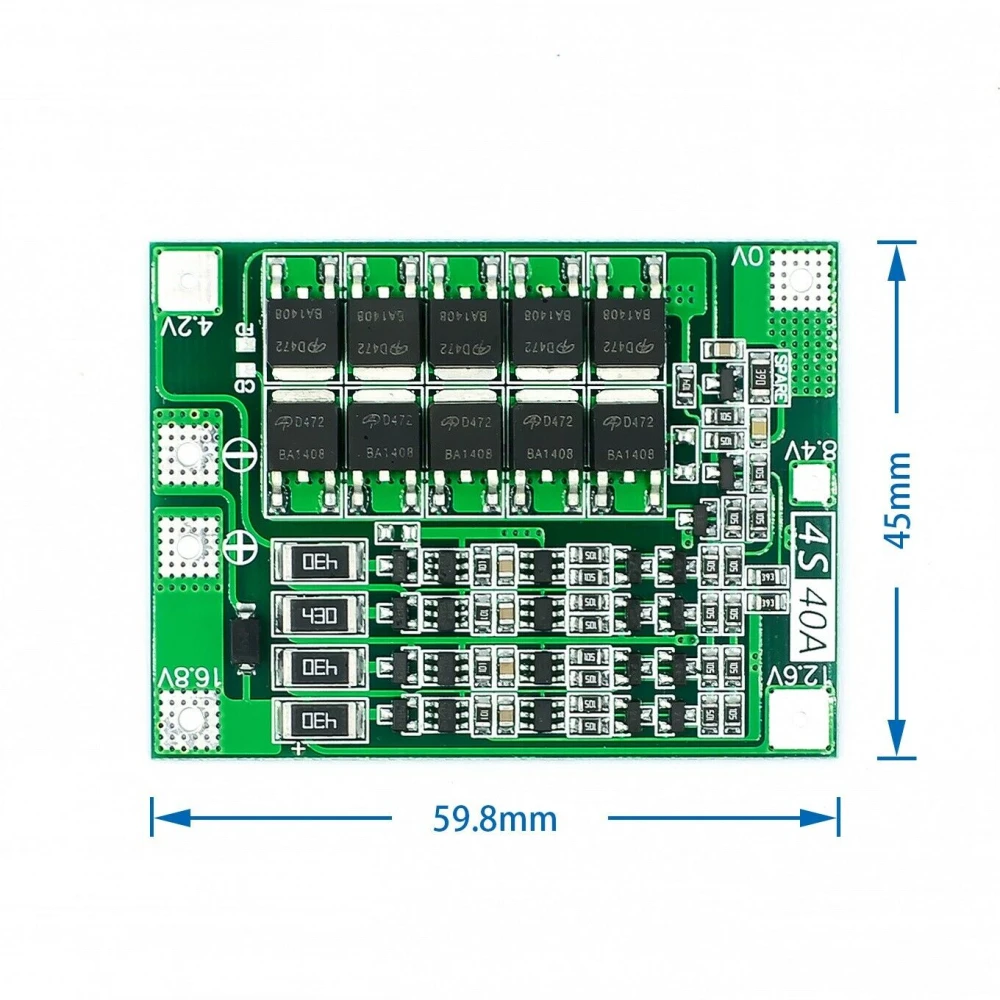
The dimensions and weight of the board may vary depending on the manufacturer, but typically a balanced 4S 40A PCB measures between 60-70 mm long, 15-20 mm wide and 3-6 mm thick, with an approximate weight of 10 to 15 grams. It is advisable to verify specific batch data if physical integration is critical.
Is there any ventilation requirement or thermal limit during continuous use at high currents?
Yes, for continuous currents close to 40 A, good ventilation is recommended. If the ambient temperature exceeds 40 °C or airflow is limited, it may be necessary to reduce continuous charge/discharge to avoid overheating the PCB. The built-in protections do not replace proper thermal dissipation in demanding applications.
What type of batteries is this protection board compatible with?
It is compatible with 4S lithium batteries, including 18650, 26650 and lithium polymer batteries with a nominal voltage of 3.6V to 3.7V per cell.
What is the maximum discharge current this board supports?
It supports a maximum continuous discharge current of 40A, ideal for applications that require high power.
How should the board be connected to avoid damage?
The wiring diagram with voltage points 0V, 4.2V, 8.4V, 12.6V and 16.8V must be followed strictly, avoiding short circuits and ensuring that each battery group has the same voltage.
What should I do if the batteries do not have the same voltage?
It is recommended to charge each battery separately before connecting them in series to ensure balanced voltage and avoid damage.
Do I need any additional component to protect the motor during charging?
Yes, it is recommended to connect a non-polar capacitor with a voltage above 25V and a capacity between 10uF and 100uF between the positive and negative motor terminals to prevent reverse spikes.
Write a customer review
Customers who bought this item also bought
-4%

Your Recently Viewed Items

 4S 40A Balanced Protection PCB Board for Lithium Battery
3.08 €