


6.77 €
In Stock
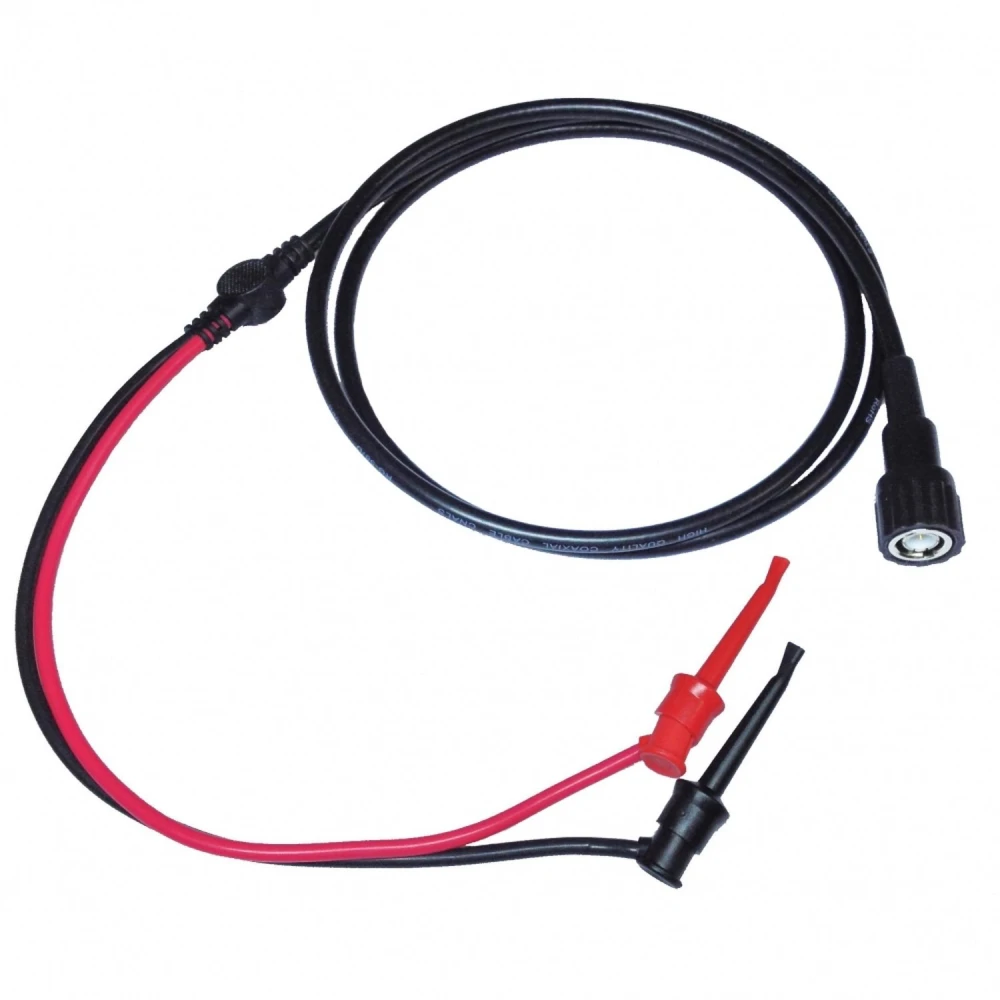
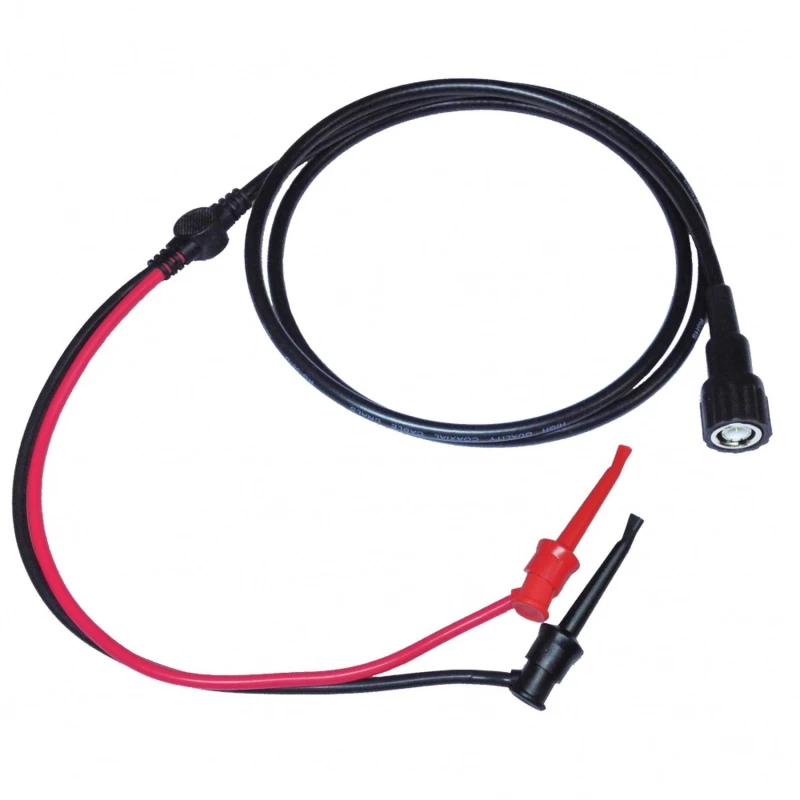
RG58 coaxial cable BNC to test clips for electronics and measurement
Brand: Amass
6.77€
VAT included (Ex VAT: 5.50 €)
Volume Discounts
| Quantity | Price | Save |
|---|---|---|
| 2+ | 6.49 € | -4% |
| 10+ | 5.97 € | -12% |
| 20+ | 5.55 € | -18% |
In Stock - Ships immediately
Standard delivery
Wed, Apr 29 - Fri, May 1
Express delivery
Mon, Apr 27 - Tue, Apr 28
30-day returns
Free returns within 30 days
Secure transaction


Share:
Free Delivery
Shipping from €4.99
Easy Returns
30 day return policy
Secure Payment
100% secure checkout
Quality Guarantee
Original products only
The RG58 coaxial cable BNC to test clips is an essential accessory for professionals and hobbyists working with electronic and measurement equipment. This cable combines the quality of RG58 coaxial cable with a male BNC connector on one end and test clip connectors on the other, making quick and secure connections easier.
Main features:
- Cable type: RG58 coaxial
- Connector: male BNC on one end
- Test clip connectors on the other end for easy attachment
- Total length: 140 cm
- Colour: black
This cable is ideal for use with multimeters, oscilloscopes and other electronic measurement equipment, allowing tests and measurements to be carried out with precision and convenience. Its robust and flexible design ensures a stable and durable connection in laboratory or field environments.
Common uses:
- Connecting electronic equipment for testing and diagnostics
- Measuring signals in circuits with oscilloscopes and multimeters
- Electronics laboratories and technical maintenance
Compatibility: Compatible with any equipment that uses male BNC connectors and requires connection via test clips, especially in electronic measurement and diagnostic applications.
This RG58 coaxial cable BNC to test clips is a reliable tool for technicians and professionals looking for quality and functionality in their connections. Its simple and effective design makes daily work with electronic equipment easier.
- High-quality RG58 coaxial cable for stable transmission
- Male BNC connector for a secure, quick connection
- Test clips on the opposite end for easy attachment during testing
- 140 cm length for extra reach and convenience
- Black colour for identification and a professional look
Customer Questions & Answers
What applications is the RG58 coaxial cable with BNC male to test clips recommended for?
This cable is suitable for temporary measurements on test equipment such as oscilloscopes, signal generators and multimeters, allowing quick connection to test points without soldering. It is recommended for low- to mid-frequency analogue signals (typically up to 500 MHz).
What are the exact materials and dimensions of the cable and connectors?
RG58 cable usually has a copper centre conductor, braided shielding and PVC outer jacket. Its typical outer diameter is 5 mm. The length of this model is 140 cm. The BNC/male connector and test clips are normally made from nickel-plated brass and durable plastic.
Is this cable compatible with 50 Ω signal sources and modern equipment?
Yes, RG58 is designed for a characteristic impedance of 50 Ω and is widely compatible with standard laboratory equipment, both older and current, that uses BNC connectors. It is not recommended for systems requiring 75 Ω (such as professional video) to avoid mismatch.
What care does this cable require to ensure durability and measurement accuracy?
For maximum durability, avoid excessive strain, sharp bends and exposure to chemicals. The clips and connectors should be kept clean and free from corrosion. It is recommended to coil the cable gently after use and store it in a dry environment.
What are the frequency and current limits for this RG58 cable with clips?
RG58 supports signals up to approximately 1 GHz, although for accurate measurements it is recommended to limit use to below 500 MHz due to attenuation. In terms of current, the test clips are suitable for measurement signals, not for high loads (typical maximum: 1 A). Exceeding these limits may affect safety or distort results.
What is the RG58 coaxial cable BNC to test clips used for?
It is used to connect electronic and measurement equipment, making testing and diagnostics easier through male BNC connectors and test clips.
What is the cable length?
The cable is 140 cm long.
Which equipment is this cable compatible with?
It is compatible with equipment that uses male BNC connectors and requires test clips for test connections, such as multimeters and oscilloscopes.
What colour is the cable?
The cable is black.
Write a customer review
Customers who bought this item also bought
Your Recently Viewed Items
-10%
-5%
-2%
RG58 coaxial cable BNC to test clips for electronics and measurement
6.77 €