


1.72 €
In Stock
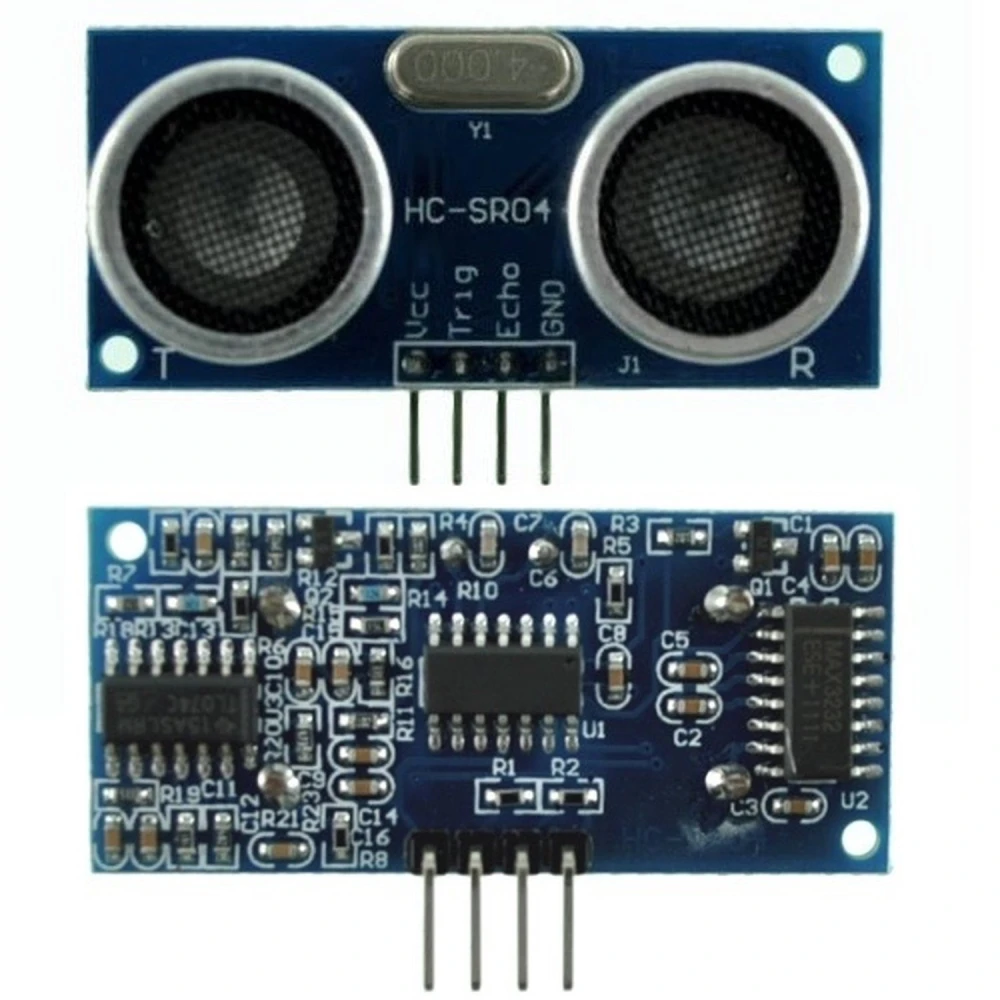
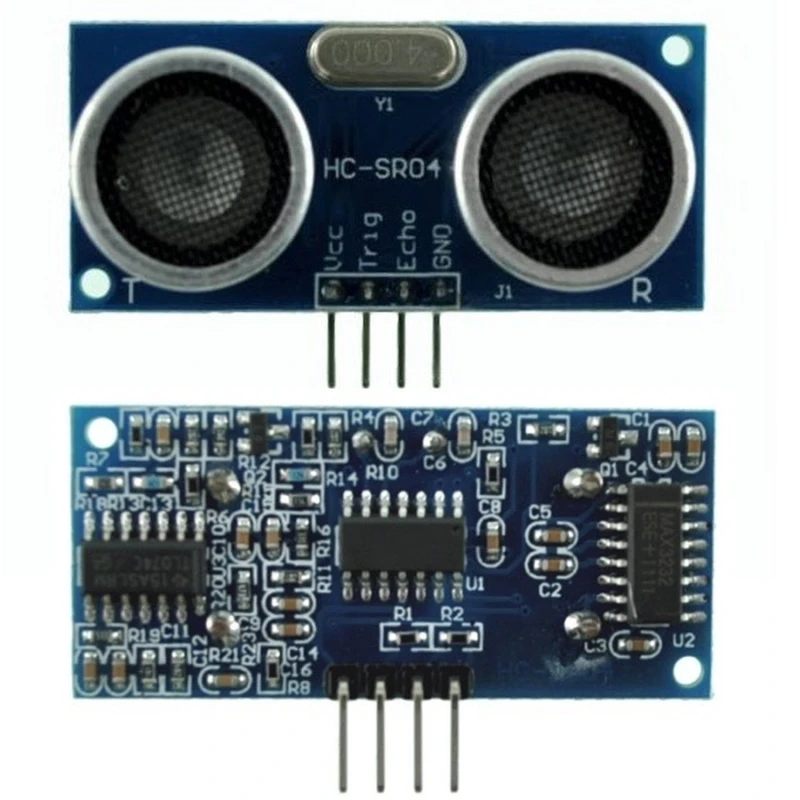
HC-SR04 Ultrasonic Sensor Module for Arduino - Accurate Distance Measurement
Brand: satkit
Save 7% Was: 1.85 €
1.72€
VAT included (Ex VAT: 1.40 €)
Volume Discounts
| Quantity | Price | Save |
|---|---|---|
| 2+ | 1.22 € | -34% |
| 10+ | 1.17 € | -37% |
| 20+ | 1.05 € | -43% |
In Stock - Ships immediately
Standard delivery
Wed, Apr 29 - Fri, May 1
Express delivery
Mon, Apr 27 - Tue, Apr 28
30-day returns
Free returns within 30 days
Secure transaction


Share:
Free Delivery
Shipping from €4.99
Easy Returns
30 day return policy
Secure Payment
100% secure checkout
Quality Guarantee
Original products only
The HC-SR04 ultrasonic sensor module for Arduino is an essential component for any robotics or electronics project that requires accurate and reliable distance measurement. This sensor works like sonar by sending ultrasonic waves and measuring the time it takes for the echo to return after bouncing off an object, allowing it to detect obstacles from 2 centimetres up to 3 metres.
Its compact and simple design makes it easy to integrate into prototyping boards or directly into robots. It includes an LED indicator that shows when a measurement is being taken, and it only requires three pins to operate: VCC, GND and output signal.
Key features
- Measurement range: 2 cm to 3 metres, ideal for detecting objects at short and medium range.
- Supply voltage: 5V +/-10% (minimum 4.5V, maximum 6V), compatible with most microcontrollers.
- Current consumption: 30 mA typical, with a maximum of 35 mA.
- Interface: 3 pins (VCC, GND, signal) for simple connection.
- Communication: Uses "pulse in / pulse out" signals to measure distance using PWM pulse width.
- LED indicator: Shows when the sensor is taking a measurement.
- TTL pulse: Minimum pulse of 2 µs (5 µs typical) and positive echo pulse of 115 µs to 18.5 ms.
- Burst frequency: 40 kHz during 200 µs.
- Compact size: 22 mm x 46 mm x 16 mm, easy to integrate into any project.
Typical uses
This sensor is widely used in robotics projects for obstacle avoidance, distance measurement in automated systems, and in prototypes that require accurate object detection. Its compatibility with Arduino, PIC and other microcontrollers makes it a versatile tool for makers and developers.
Compatibility
The HC-SR04 is compatible with Arduino boards and other microcontrollers that support digital input and output signals. Its simple interface allows quick and straightforward integration into DIY, educational or professional projects.
With this module, you can easily and reliably implement ultrasonic distance measurement systems, optimising your electronic and robotics projects.
- Measurement range: 2 cm to 3 metres
- Power supply: 5V +/-10% (4.5V to 6V)
- Typical current: 30 mA (max. 35 mA)
- 3-pin interface: VCC, GND, signal
- PWM pulse communication (pulse in / pulse out)
- Active measurement indicator LED
- Ultrasonic frequency: 40 kHz
- Compact dimensions: 22 x 46 x 16 mm
Customer Questions & Answers
What are the advantages and limitations of the HC-SR04 compared with infrared sensors for distance measurement?
The HC-SR04 offers a wider measuring range (2 cm to 3 m) and is usually more accurate on flat, hard surfaces. However, it has limitations with soft or sound-absorbing materials and can be affected by acoustic interference. Infrared sensors work better in low light and on dark objects, but their range is shorter and accuracy varies depending on the colour and reflectivity of the object.
What are the dimensions and weight of the HC-SR04 module? Does it include cables or additional components in the box?
The module measures 46 mm x 22 mm x 16 mm and weighs approximately 10 g. The package generally includes only the sensor board; cables or mounting brackets are usually not included unless stated otherwise by the supplier.
What measurement accuracy and tolerance does the HC-SR04 sensor have within its operating range?
Typical accuracy is ±3 mm at most distances, assuming optimal temperature conditions (20–25 °C) and rigid reflective surfaces. Tolerances may increase with soft, small or angled objects, or under poor acoustic conditions.
How do you connect the HC-SR04 ultrasonic sensor to an Arduino?
It connects using three pins: VCC to 5V, GND to ground and the signal pin to a digital pin on the Arduino to measure the echo pulse.
What distance range can the HC-SR04 measure?
It can measure distances from 2 centimetres up to 3 metres with good accuracy.
What voltage does the sensor need to work properly?
The sensor works with a 5V supply voltage with a ±10% margin, that is, between 4.5V and 6V.
Is it compatible with other microcontrollers besides Arduino?
Yes, it is compatible with PIC and other microcontrollers that can handle digital input and output signals.
What does the sensor LED indicate?
The LED lights up to indicate that the sensor is taking an active measurement.
Write a customer review
Customers who bought this item also bought
-13%
-13%
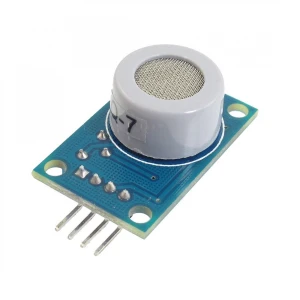
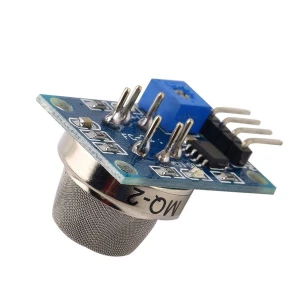
MQ-2 Smoke and Gas Sensor for Arduino - Compatible Detector Module
3.00€
3.44 €
Only 6 left in stock
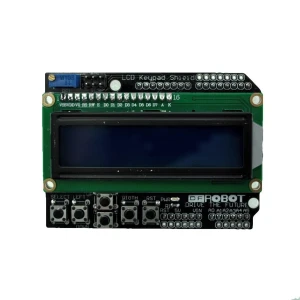
LCD Keypad Shield LCD1602 Compatible with Arduino with Built-in Display and Buttons
4.92€
Only 10 left in stock
Your Recently Viewed Items
-4%
HC-SR04 Ultrasonic Sensor Module for Arduino - Accurate Distance Measurement
1.72 €1.85 €