


2.02 €
In Stock
HX711 Load Cell Sensor for Arduino - 24-Bit Precision A/D Module
Brand: satkit
Save 18% Was: 2.46 €
2.02€
VAT included (Ex VAT: 1.64 €)
Limited stock
Standard delivery
Wed, Apr 29 - Fri, May 1
Express delivery
Mon, Apr 27 - Tue, Apr 28
30-day returns
Free returns within 30 days
Secure transaction


Share:
Free Delivery
Shipping from €4.99
Easy Returns
30 day return policy
Secure Payment
100% secure checkout
Quality Guarantee
Original products only
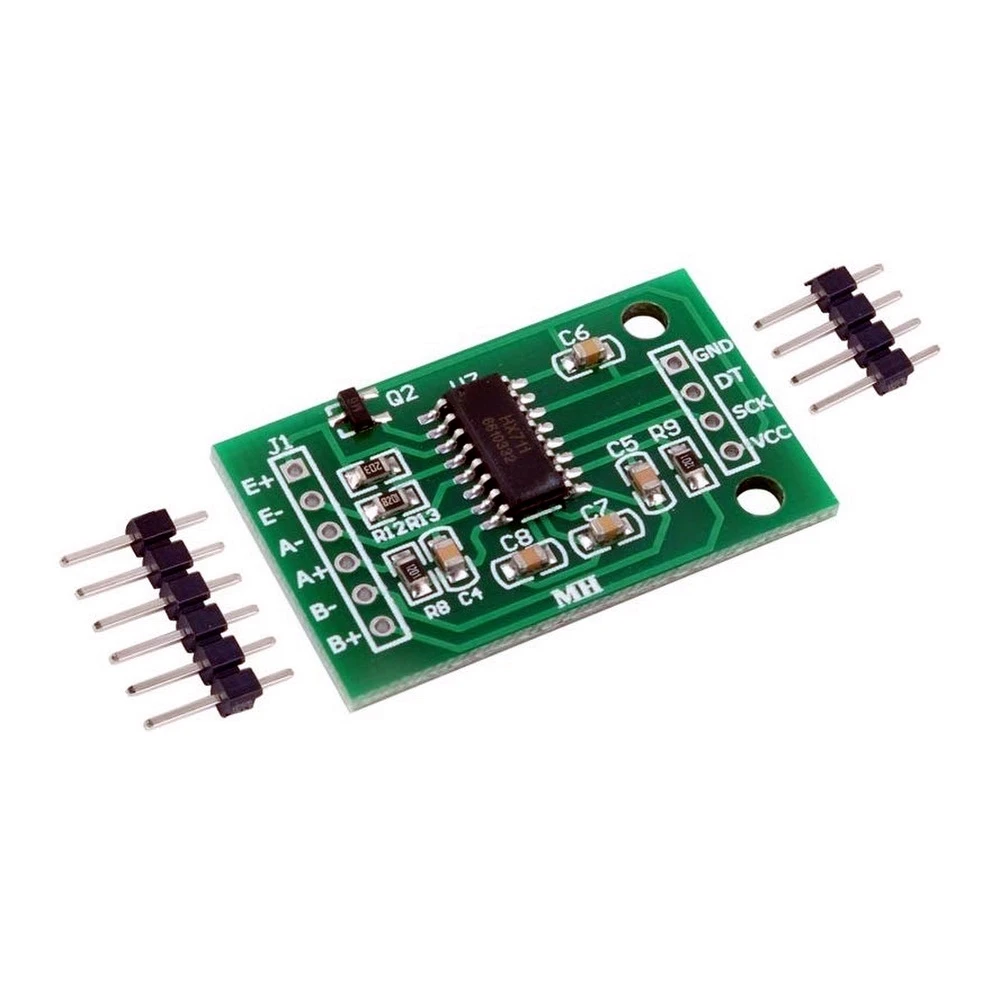
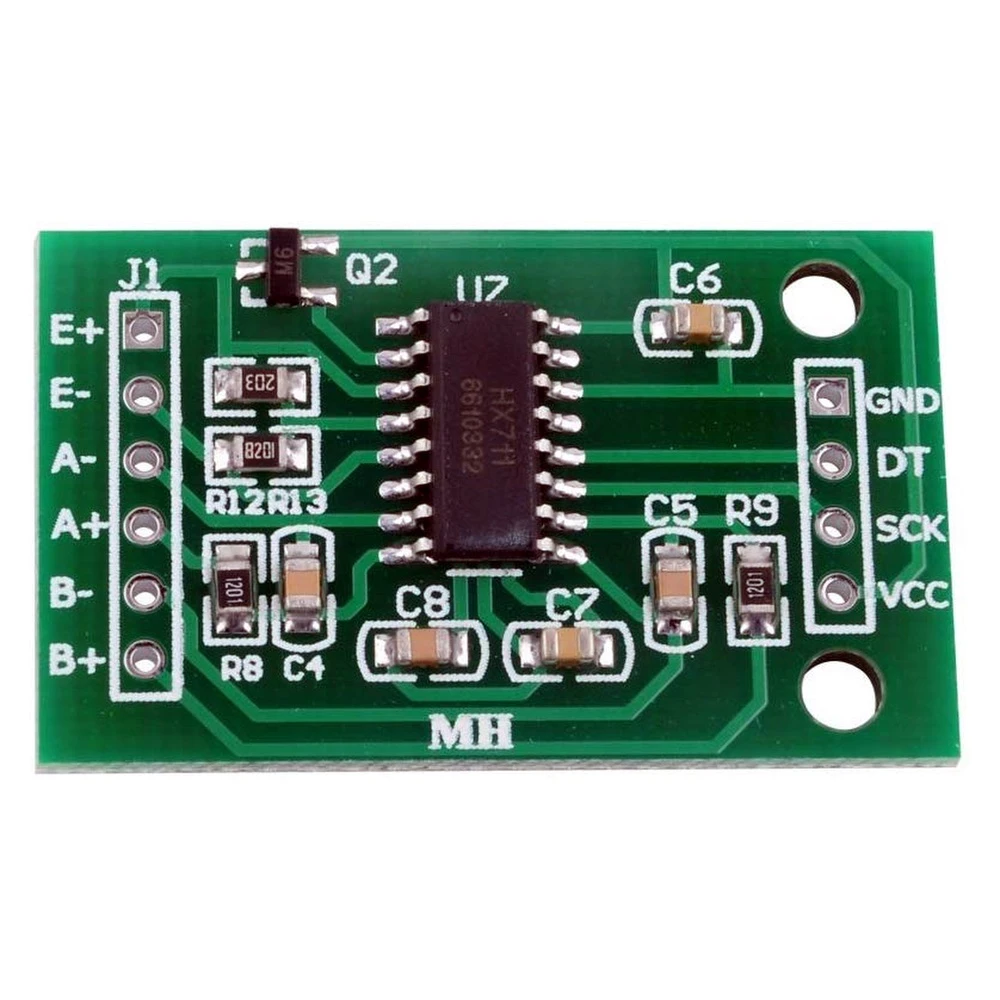
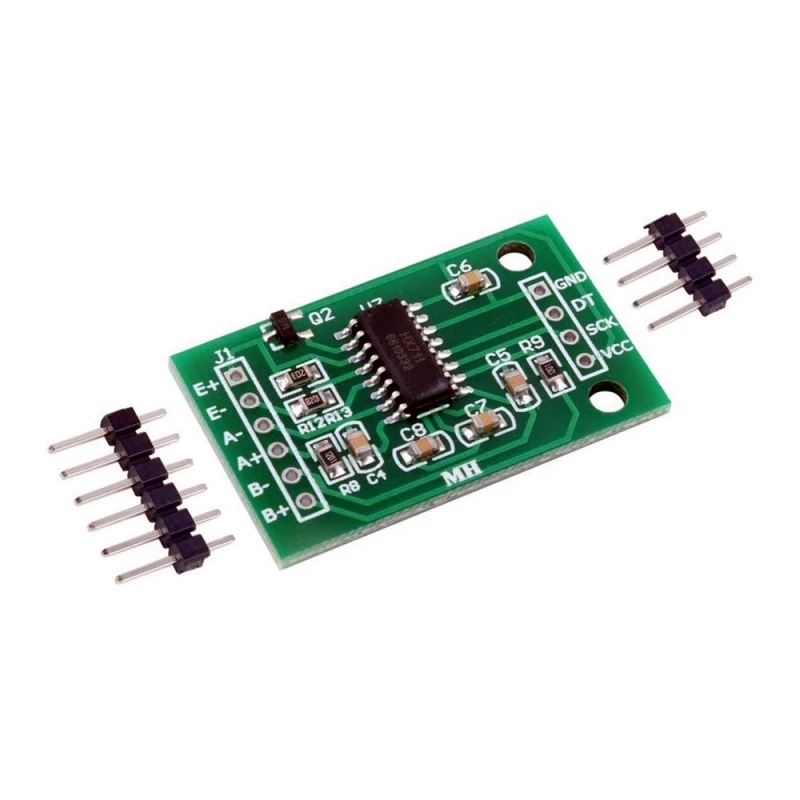
The HX711 load cell sensor for Arduino is an analogue-to-digital (A/D) conversion module designed for high-precision weight and pressure measurement applications. This module uses a 24-bit converter chip that delivers accurate and reliable readings, ideal for projects with Arduino and other microcontrollers.
This module features two selectable differential analogue input channels, allowing you to connect different pressure sensors or load cells. It integrates a programmable gain amplifier (PGA) with gain options of 32, 64 and 128, improving measurement sensitivity and precision.
Main features:
- Two selectable differential input channels for sensor flexibility.
- Low-noise active PGA amplifier with selectable gain (32, 64, 128).
- Integrated power supply regulator for the ADC and load cell.
- Internal oscillator that requires no external components, with an external crystal option.
- Automatic reset when the module is powered on.
- Simple serial digital interface, controlled by pins without complex programming.
- Selectable output rate: 10 samples per second (SPS) or 80 SPS.
- Simultaneous rejection of 50 and 60 Hz interference for greater stability.
- Low current consumption: less than 1.5 mA in normal operation.
- Operating voltage range: 2.6 V to 5.5 V compatible with Arduino.
- Operating temperature range: -20 °C to +85 °C.
Typical uses:
- Design and build of high-precision electronic scales.
- Pressure measurement in bridge-type sensors.
- Arduino electronics and robotics projects requiring accurate analogue measurement.
- Integration into industrial control and monitoring systems.
This module is compatible with Arduino boards and other microcontrollers that support serial digital communication. Its low cost and high precision make it an excellent choice for developers and hobbyists looking for a reliable weight and pressure sensor.
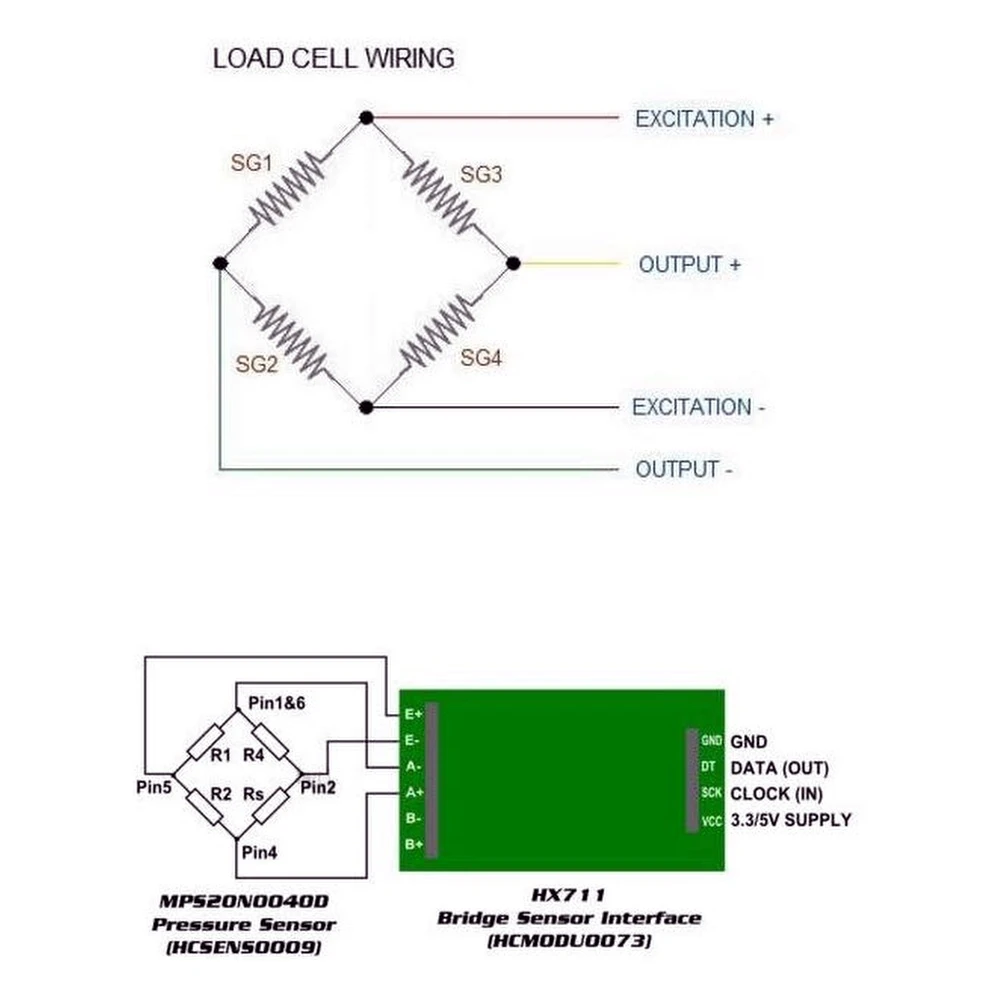
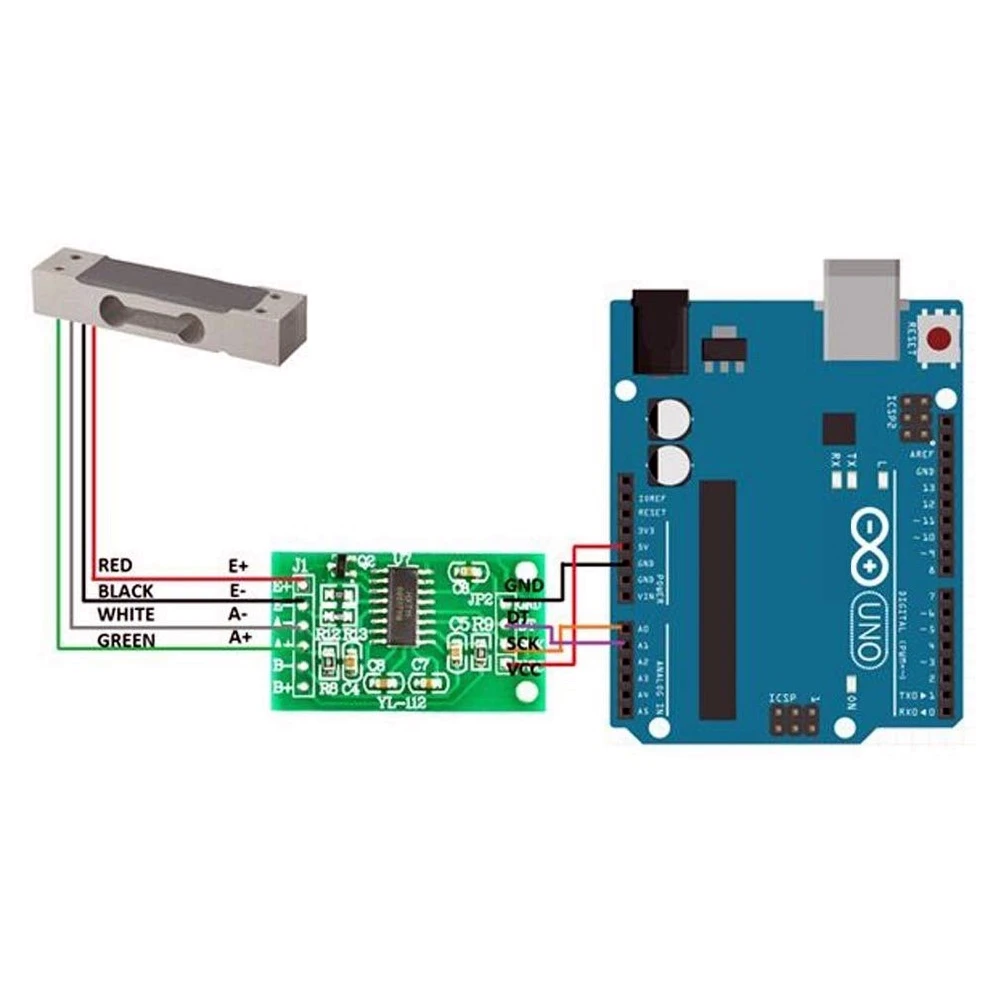
For use, it is recommended to connect the load cell or pressure sensor to the differential inputs and power the module with a voltage within the specified range. The digital reading can be obtained using Arduino-compatible libraries that make integration and programming easier.
- Two selectable differential analogue input channels
- Low-noise PGA amplifier with programmable gain 32, 64, 128
- Integrated power supply regulator for ADC and load cell
- Internal oscillator with no external components required
- Simple serial digital interface, no complex programming
- Selectable output rate: 10 SPS or 80 SPS
- Simultaneous rejection of 50 and 60 Hz interference
- Low power consumption: less than 1.5 mA in normal operation
- Voltage range: 2.6 to 5.5 V compatible with Arduino
- Temperature range: -20 °C to +85 °C
Customer Questions & Answers
What are the main advantages of the HX711 sensor compared with other A/D weighing modules for Arduino?
The HX711 stands out for its 24-bit precision A/D converter, which allows more sensitive and stable measurements compared with lower-resolution modules (such as 12-bit or 16-bit ones). Its dual differential channel makes dual-cell applications easier, and the programmable gain (128 and 64) offers flexibility for different load ranges. It also integrates a voltage regulator and internal oscillator, simplifying the circuit and reducing cost compared with alternatives that require external components.
What installation considerations should I keep in mind to obtain accurate measurements with this sensor?
For optimum measurements, it is recommended to place the module on a stable surface, minimise electromagnetic interference and use short, twisted conductors between the HX711 and the load cell. It is important to use a single shared power supply with the microcontroller to avoid noise and to carry out periodic calibration of the system according to the environment and the load cell used.
What are the accuracy limits and possible sources of error when using the HX711?
The HX711 offers a theoretical resolution of up to 24 bits, but in practice its typical error is between 1–2 μV/bit and accuracy depends heavily on the quality of the load cell, electrical noise, selected gain and sampling rate (10SPS improves noise compared with 80SPS). Common sources of error include thermal fluctuations, unstable power supply and poor cable connections. It is advisable to isolate the system properly and calibrate it in the real operating environment.
What is the HX711 load cell sensor for Arduino used for?
It is used to convert analogue signals from weight or pressure sensors into high-precision digital signals for projects with Arduino and other microcontrollers.
Is the HX711 compatible with Arduino boards?
Yes, the HX711 module is compatible with Arduino boards and can be easily integrated using specific load cell reading libraries.
What precision does the HX711 module offer?
It offers 24-bit precision thanks to its high-resolution analogue-to-digital converter.
What is the voltage range for powering the HX711 module?
The supply range is 2.6 to 5.5 volts, compatible with most Arduino boards.
What sampling rate does the HX711 have?
It allows you to select between 10 samples per second (SPS) or 80 SPS, depending on the application.
Write a customer review
Customers who bought this item also bought
-13%
-13%
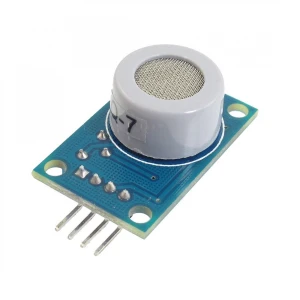
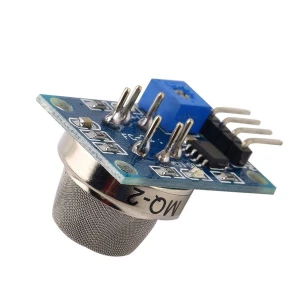
MQ-2 Smoke and Gas Sensor for Arduino - Compatible Detector Module
3.00€
3.44 €
Only 6 left in stock
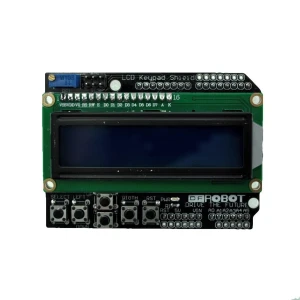
LCD Keypad Shield LCD1602 Compatible with Arduino with Built-in Display and Buttons
4.92€
Only 10 left in stock
Your Recently Viewed Items
 HX711 Load Cell Sensor for Arduino - 24-Bit Precision A/D Module
2.02 €2.46 €