


5.54 €
In Stock
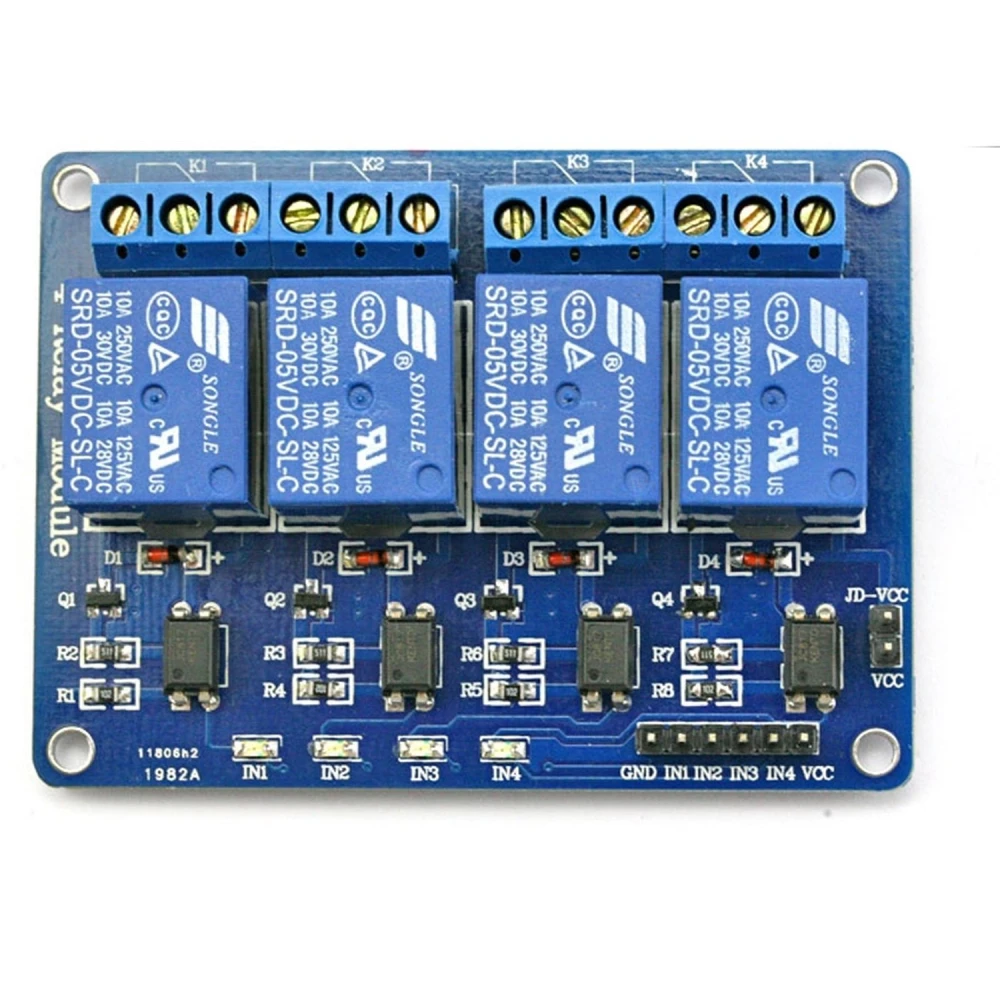
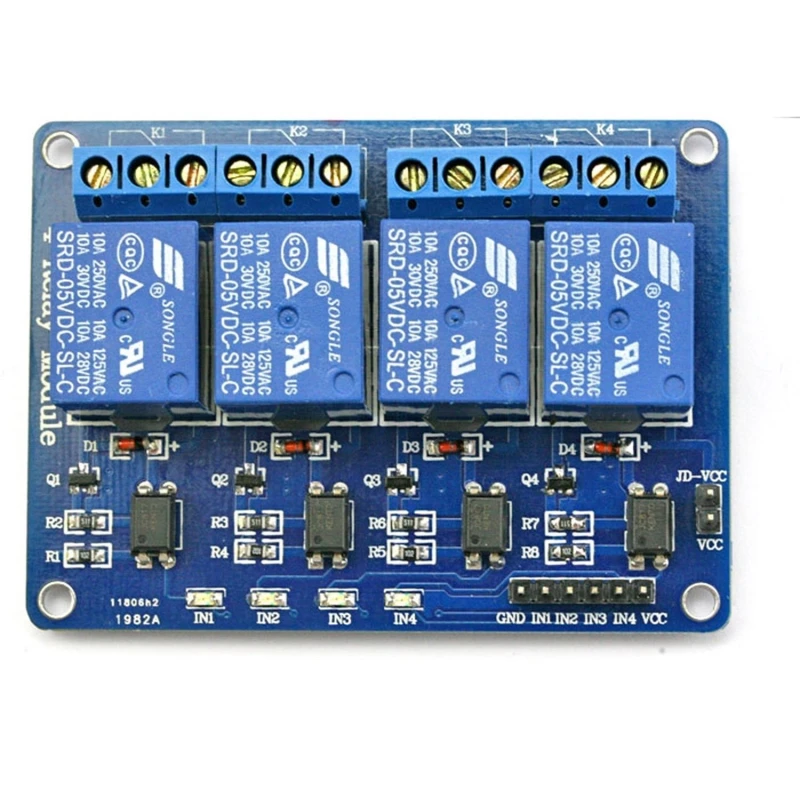
Compatible 4-Channel 5V Relay Kit for Arduino
Brand: satkit
5.54€
VAT included (Ex VAT: 4.50 €)
Volume Discounts
| Quantity | Price | Save |
|---|---|---|
| 2+ | 5.31 € | -4% |
| 10+ | 5.04 € | -9% |
| 20+ | 4.43 € | -20% |
In Stock - Ships immediately
Standard delivery
Wed, Apr 29 - Fri, May 1
Express delivery
Mon, Apr 27 - Tue, Apr 28
30-day returns
Free returns within 30 days
Secure transaction


Share:
Free Delivery
Shipping from €4.99
Easy Returns
30 day return policy
Secure Payment
100% secure checkout
Quality Guarantee
Original products only
Compatible 4-channel 5V relay kit for Arduino
This 4-relay 5V kit is designed to integrate easily with Arduino boards, allowing you to control external loads such as lights, motors and other electrical devices simply and safely. Each relay can switch up to 10A at 30V DC or 10A at 440V AC, making it versatile for multiple automation and control applications.
Main features:
- 4 independent relay outputs for controlling several devices at the same time.
- Independent contacts that make wiring and load management easier.
- Screw terminals to ensure firm and secure connections.
- Lightweight, compact design that saves space in your projects.
Typical uses:
- Lighting automation: control lights and lighting systems with Arduino.
- Control of small motors for robotics or automation projects.
- Switching electrical devices in home automation systems.
- Educational projects for learning load control with Arduino.
Compatibility: This kit is compatible with any Arduino board that works with 5V signals, making it easy to integrate into existing or new projects.
With this 4-channel 5V relay kit for Arduino, you can expand the capabilities of your Arduino board and control electrical devices safely and efficiently, ideal for electronics hobbyists and professionals.
- 4 x 5V relays for controlling external loads
- Switching up to 10A 30V DC or 10A 440V AC
- Independent contacts for secure wiring
- Screw terminals for firm connections
- Lightweight, compact design compatible with Arduino
Customer Questions & Answers
What are the main functions and advantages of this 4-relay kit compared with lower-channel modules or SSRs?
This kit lets you control up to 4 independent loads (bulbs, motors, etc.) from Arduino or 5 V microcontrollers, giving you the flexibility to automate several devices in a single project. Compared with lower-channel modules, it reduces wiring and the space required. Unlike solid state relays (SSRs), this mechanical relay offers lower cost and can switch both AC and DC up to 10 A, although with slower switching speed and a shorter service life than SSRs.
What are the physical dimensions and weight of the module, and which exact components are included?
The module measures approximately 73 mm × 50 mm × 19 mm and weighs around 55 g. The package includes the assembled 4-relay board with screw terminals, signal input pins and a pre-soldered relay socket. Cables, power supply and any additional items are not included.
What safety precautions or recommendations should be considered during installation and use, especially when handling AC?
When switching AC loads, installation must be carried out by qualified personnel, ensuring secure connections and avoiding contact with live parts. Local electrical regulations must be observed. The relays provide isolation, but it is recommended to enclose the module if it is installed in exposed environments.
What are the common problems with this type of relay and how can they be diagnosed?
The most common issues include switching failure due to overload, mechanical wear after many cycles (typical service life: 100,000 operations at nominal load), contact welding caused by overvoltage, or no response if the control signal is insufficient (<4.5 V). It is recommended to visually inspect the contacts, check continuity and verify the control voltage for diagnosis.
What is a 5V relay used for in Arduino?
A 5V relay allows Arduino to control higher-power electrical devices that cannot be driven directly by the board, such as lights or motors.
How many relays are included in this kit?
This kit includes 4 independent relays for controlling multiple loads at the same time.
What type of loads can I control with this kit?
You can control loads such as lights, motors and other electrical devices that operate within the relay's switching limits.
Is it compatible with all Arduino boards?
Yes, it is compatible with Arduino boards that operate with 5V signals, making it easy to integrate into a range of projects.
What is the maximum current the relays can handle?
Each relay can switch up to 10A at 30V DC or 10A at 440V AC.
Write a customer review
Customers who bought this item also bought
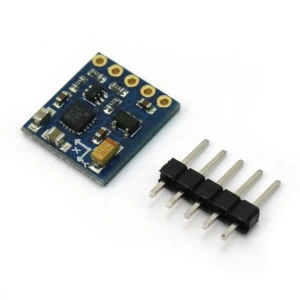
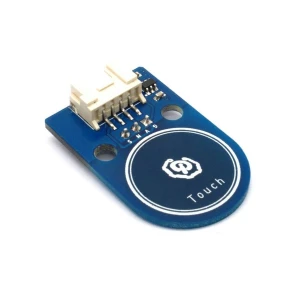
Plug and play Arduino touch button compatible with Grove interfaces and M4 kits
2.71€
Only 4 left in stock
-5%
-8%
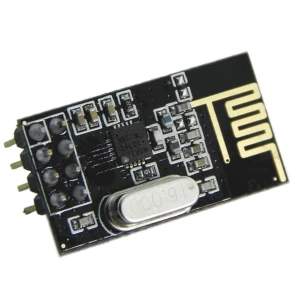
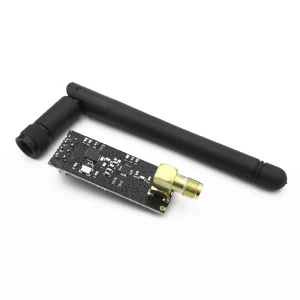
NRF24L01+ Wireless Transceiver for Arduino - Efficient Wireless Communication
1.81€
1.97 €
Only 10 left in stock
Your Recently Viewed Items
 Compatible 4-Channel 5V Relay Kit for Arduino
5.54 €