

Anyone who works with trucks knows it all too well: the AdBlue (SCR) system is one of the biggest pain points on a heavy-duty vehicle. NOx sensors that fail, a urea pump that seizes up, a module that costs a fortune to replace, AdBlue that crystallises in the cold... and when any of that goes wrong, the truck drops into limp mode: power is cut, speed is capped, and right in the middle of a busy season or halfway through a delivery run, you are stuck.
That is why we get so many questions about AdBlue emulators. In this article we are going to explain, clearly and honestly, what they are, what types exist, why a Euro 4/5 emulator will not work on a Euro 6, why each model is fitted in a different way, and why they are becoming harder and harder to find. This is a technical and informational guide — it is not a fitting manual for road use — and at the end we lay out the legal position plainly and without softening anything.
What exactly is an AdBlue (SCR) emulator?
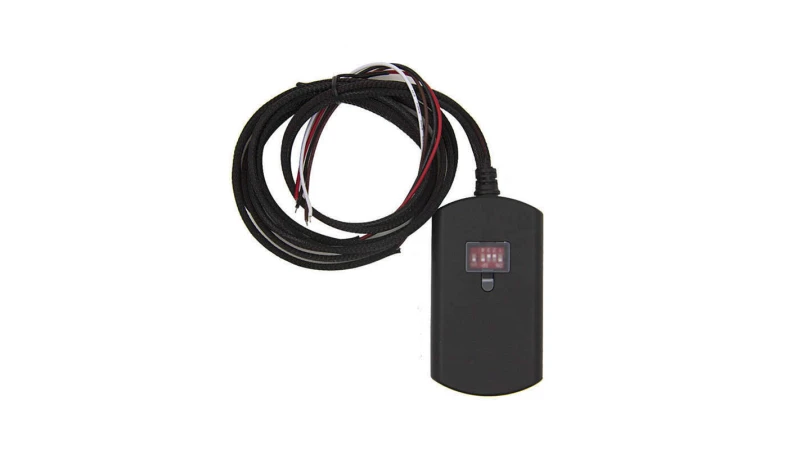
An AdBlue emulator is a small electronic device that connects to the vehicle's CAN bus and takes the place of the SCR system control module. Instead of actually managing AdBlue, what it does is send the ECU the signals it expects to see — readings from the NOx sensors, dosing data, exhaust temperature, urea tank level and quality — so that the ECU 'believes' everything is fine even if the system is empty, disconnected or removed. Result: the dashboard warning goes out and the torque and speed restriction does not kick in.
It is worth being upfront about this, because it is the key to everything that follows: an emulator does not reduce emissions. It does not clean anything, it does not fix the SCR; what it does is replace the monitoring. That is precisely what makes it an emissions-manipulation device — what the regulations call a defeat device — and that is where all the legal restrictions you will read about below come from.
Types of emulators: not every one will work on your truck
This is the mistake that costs people the most: buying 'an AdBlue emulator' without thinking further. There is no such thing as one that works on everything. Two criteria matter above all else: the Euro emissions standard and the make and model of the truck.
By emissions standard: Euro 4/5 versus Euro 6
Each step up in the Euro standard tightened NOx limits and, crucially, added more sensors and more on-board diagnostic (OBD) checks. So:
- Euro 4 and Euro 5: these are simpler architectures with fewer monitored parameters. More 'universal' solutions do have a place here. A good example is the 9en1 AdBlue emulator for heavy-duty vehicles, designed to cover several makes at this stage.
- Euro 6: the demands are far greater. It introduces stricter limits, additional sensors (for example, dual NOx probes), much tougher plausibility checks and a dedicated AdBlue ECU. That is why universal emulators for Euro 6 simply do not exist: every one is specific to a make, model and sub-stage.
The practical conclusion is straightforward: a Euro 5 emulator cannot cope with the extra monitoring of a Euro 6 (and vice versa). Get the standard wrong and it will not work — full stop.
Universal versus brand-specific
For Euro 4/5 you have both 'multi-brand' and manufacturer-specific options depending on the truck: DAF, Volvo, Scania, MAN, Mercedes-Benz, Iveco, Renault or Ford.
For Euro 6, as we said, you need to go straight to the specific unit for your make and range: DAF Euro 6 (XF, CF, LF), Volvo Euro 6 (FH, FM, FMX), Scania Euro 6 (R, G, S, P and V8), MAN Euro 6, Mercedes-Benz Euro 6 (Atego) or Iveco Euro 6 (Eurocargo, Stralis, Trakker). Each manufacturer uses different CAN messages, so the device has to 'speak the exact language' of that particular ECU.
For trucks and heavy-duty vehicles only
A quick but important note, because this causes a lot of confusion: these devices belong to the world of heavy-duty vehicles. There are virtually no emulators for cars, and for vans only a handful of very specific cases exist. Why? Because passenger cars and most vans use different, far more integrated emissions architectures — often combining SCR and a DPF with EGR, with a more stringent car-type OBD and no independently accessible AdBlue ECU on the bus. Trucks, by contrast, expose the SCR module on the CAN in exactly the way these emulators were designed to interpret. If someone offers you a 'universal AdBlue emulator for your diesel car', be very wary.
Fitting varies depending on the model
Another common question: 'is it just plug in and go?' It depends entirely on the model. Broadly speaking there are two formats, and we are deliberately staying at a general level here — we are not going to go into which wire, which fuse, or how and when, because that is workshop territory and varies with every vehicle:
- Plug & play: connects via an existing connector — typically at the diagnostic point or by replacing the SCR module connector. This is the quickest approach and the most common on many models.
- Wired installation: spliced into the wiring loom and the CAN bus, with a proper earth connection and sometimes a PC-based configuration step. More involved, and requires knowing what you are doing.
The underlying point is that every make and model has its own procedure: what works on one truck does not necessarily work on another. That is why we always recommend the fitting be carried out by qualified personnel, with the vehicle documentation in hand.
Special care with bodybuilt and specialist vehicles
If we are talking about concrete mixers, buses, tippers, crane trucks, fire appliances or any bodybuilt truck, the picture changes completely. On top of the base chassis, the body builder adds their own module (BBM), power take-off (PTO) control, additional or relocated fuse boxes and auxiliary wiring that simply does not appear on a standard chassis-cab.
This means that generic instructions do not apply — and can actually be dangerous — on these vehicles: the location of the fuse boxes, the routing of the loom and the identification of the circuits will not match what any general guide assumes. In these cases, the work is exclusively for professionals who know that specific bodywork. We do not provide step-by-step guidance for them, and you should not trust anyone who treats it lightly either.
Why are they so hard to find?
If you have searched for emulators on Amazon, eBay or AliExpress and watched them disappear, that is no coincidence. The big marketplaces ban them outright. In 2023, US environmental authorities sued eBay over the sale of hundreds of thousands of defeat devices, and the platform responded by explicitly banning everything that eliminates or bypasses emissions control systems (CAT, DPF, SCR/DEF...). In the EU, an emulator fits the definition of a manipulation device, so these mass-market channels pull them to protect themselves.
The result: listings appear and vanish, quality is a lottery and support is non-existent. At SatKit we carry the full range of AdBlue emulators, organised by make and by Euro standard, with real technical information so you get it right first time.
In summary: how to choose the right emulator
- Identify the Euro standard of your truck (4/5 or 6). That comes first.
- Choose by make and model. For Euro 6 this is non-negotiable; for Euro 4/5 you can consider a multi-brand option.
- Have it fitted by a professional, especially on bodybuilt vehicles.
- And read the legal notice below carefully: it matters — a great deal.
Important legal notice (read before you buy)
This content is for informational and educational purposes only; it does not constitute legal advice or a fitting guide for vehicles used on public roads. AdBlue/SCR emulators are supplied solely and exclusively for vehicles and machinery that do NOT travel on public roads: agricultural, construction, mining or industrial machinery used off-road; competition vehicles on closed circuits or private land; test benches and diagnostic/repair work carried out with the engine or ECU removed; or export to markets without an equivalent emissions regulatory framework.
It is illegal to install or use this type of device on any vehicle travelling on public roads in the EU (Regulation (CE) 715/2007, Regulation (CE) 595/2009 and Regulation (EU) 2018/858). Doing so constitutes a major non-type-approved modification that causes an automatic fail at the ITV roadworthiness test — which since 2025 reads the OBD system on Euro 5/6/VI diesel vehicles — and leaves the vehicle unlawfully unfit for road use, with possible consequences for insurance cover. Fitting must always be carried out by qualified professionals, especially on specialist or bodybuilt vehicles whose fuse boxes and wiring are non-standard.
By purchasing the product, the buyer declares that it will be used solely for a lawful purpose in their jurisdiction and accepts full responsibility for compliance. SatKit does not sell these devices for use on registered vehicles travelling on public roads and reserves the right to refuse any order. We accept no liability for misuse of the product.