

J-Link V9 ARM JTAG Emulator compatible with ARM7, ARM9, ARM11 and Cortex-STM3
Brand: satkit
VAT included (Ex VAT: 19.90 €)






J-Link V9 ARM JTAG Emulator is an essential tool for developers working with ARM7, ARM9, ARM11 and Cortex-STM3 microcontrollers. This emulator supports multiple development environments such as IAR EWARM, ADS, KEIL, WINARM and Real View, making it easier to debug and program ARM chips with high efficiency and precision.
Key features:
- Compatibility with ARM7TDMI cores (Rev. 1, 3 and 4), ARM720T, ARM920T, ARM926EJ-S, ARM946E-S, ARM966E-S, ARM11 and Cortex-M3.
- High-speed USB 2.0 interface for simple and fast connection to the PC.
- Maximum JTAG transfer speed of 12 MHz, with download speeds of up to 600 kB/s for ARM7 and 550 kB/s for ARM9.
- Support for target board voltage ranges from 1.2V to 3.3V, also compatible with 5V.
- Two-colour LED indicators showing working and communication status, improving real-time monitoring.
- Includes USB cable and 20-wire ribbon cable for connection to the target board.
- Overcurrent protection with USB power supply delivering up to 300 mA to the target board.
- Compatible with Microsoft Windows 2000, XP, 2003 and Vista operating systems, including x64 versions.
Improvements over previous versions:
- Improved SWD interface circuit for more stable debugging and expanded functionality.
- Use of a two-level converter chip for a more robust JTAG interface.
- Optimised firmware with an expanded bootloader area to make future updates and new functions easier.
- Improved and faster support for ARM11, making it the first choice for this core.
Typical uses:
This emulator is ideal for developers who need to debug and program ARM microcontrollers in electronics projects, automation, embedded systems and firmware development. Its compatibility with multiple development environments and ARM cores makes it versatile for a range of professional and educational applications.
Package contents:
- 1 x J-Link V9 ARM Emulator
- 1 x USB Cable
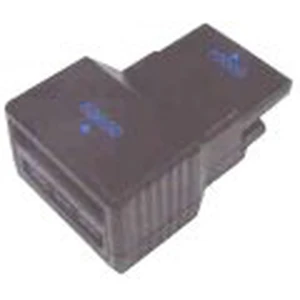
- 1 x J-Link JTAG Converter
Technical specifications:
- Power supply: USB, consumption less than 50mA.
- Interface: USB 2.0 full speed (12 Mbps).
- JTAG interface: standard 20-pin, with 14-pin option.
- Maximum JTAG speed: 12 MHz.
- Supported target board voltage: 1.2V - 3.3V and 5V.
- Operating temperature: +5°C to +60°C.
- Dimensions: 10,3 cm x 5,3 cm x 2,7 cm.
- Weight: 60 grams (without cables).
- EMC certifications: EN 55022, EN 55024.
Important note: This product is currently out of stock. We recommend checking our website for future availability or similar alternatives.
- Compatible with ARM7, ARM9, ARM11 and Cortex-M3 cores
- USB 2.0 interface for fast, stable connection
- 12 MHz maximum JTAG speed for efficient debugging
- Supports target board voltages from 1.2V to 5V
- Two-colour LED indicators for status monitoring
- Includes USB cable and 20-wire ribbon cable
- Compatible with multiple development environments: IAR, ADS, KEIL, WINARM
- Overcurrent protection and USB power supply
- Optimised firmware for future updates
- Compact dimensions and lightweight design for easy handling
Customer Questions & Answers
What functional advantages does the J-Link V9 offer over earlier versions such as V7?
The J-Link V9 includes important improvements over the V7 version: it uses an AT91SAM7S64 chip with greater Flash and SRAM capacity, which makes future firmware updates easier. It improves the SWD interface by using a two-level converter that protects the chip against configuration errors, and adds separate status LEDs (USB, target CPU, 5V output). ARM11 support is better and faster, despite SWD speed being slightly lower than on the V7. These changes improve compatibility and safety during debugging.
What are the dimensions, weight and main materials of the J-Link V9 emulator, and what is included in the box when you buy it?
The J-Link V9 emulator typically measures around 90 mm x 45 mm x 20 mm and weighs about 65 g, although these values may vary slightly depending on the manufacturer. It is mainly built from high-strength ABS plastic and internal electronic components. The box usually contains the emulator, a USB Type-A to mini-B (or micro-B) cable, and one or two JTAG/SWD connection cables. It is advisable to check the exact contents with the seller.
What compatibility and connection requirements does the J-Link V9 have with microcontrollers and operating systems?
The J-Link V9 is compatible with ARM7, ARM9, ARM11 and Cortex-M3 architectures, as well as STM32 microcontrollers and similar devices that support JTAG and SWD interfaces. It operates via USB 2.0 and requires a free USB port. It is compatible with development environments such as Keil MDK, IAR EWARM and ADS, and works on Windows and, with the appropriate drivers, on Linux and macOS. The typical target interface operating voltage ranges from 1.2 V to 3.3 V.
What should be considered when installing and setting up the J-Link V9 for the first time?
It is essential to install the latest drivers from SEGGER on your operating system before connecting the device. For the first connection, plug the J-Link V9 into the USB port and then carefully connect it to the target microcontroller’s JTAG/SWD header, respecting the orientation and pinout. Avoid changing the SWD mode if you are unsure about compatibility, to prevent damage to the device.
What are the speed or debugging performance limitations compared with alternatives such as ST-Link or CMSIS-DAP?
The J-Link V9 offers competitive transfer and debugging speeds compared with alternatives such as ST-Link or CMSIS-DAP, although SWD speed is marginally lower than on the V7 (around 1–3 MHz depending on configuration). Its main advantage lies in stability, broad ARM core support and compatibility with multiple IDEs. ST-Link is usually faster on STM32 but only supports STM chips, whereas J-Link has more universal ARM support and better state handling.
Which ARM cores is the J-Link V9 compatible with?
The J-Link V9 is compatible with ARM7TDMI cores (Rev. 1, 3 and 4), ARM720T, ARM920T, ARM926EJ-S, ARM946E-S, ARM966E-S, ARM11 and Cortex-M3.
Which development environments does the J-Link V9 support?
It supports environments such as IAR EWARM, ADS, KEIL, WINARM and Real View, making integration and debugging easier in these systems.
What is the maximum JTAG transfer speed?
The maximum JTAG transfer speed is 12 MHz, with download speeds of up to 600 kB/s for ARM7 and 550 kB/s for ARM9.
Which operating systems are compatible with this emulator?
It is compatible with Microsoft Windows 2000, XP, 2003 and Vista, including 64-bit versions.
Is the J-Link V9 currently available to buy?
The product is currently out of stock. We recommend checking availability on the website or looking for similar alternatives.
Write a customer review
Customers who bought this item also bought

Your Recently Viewed Items
SONOFF ZigBee Wireless Switch SNZB-01 with Single, Double and Long Press Control