


6.89 €
In Stock
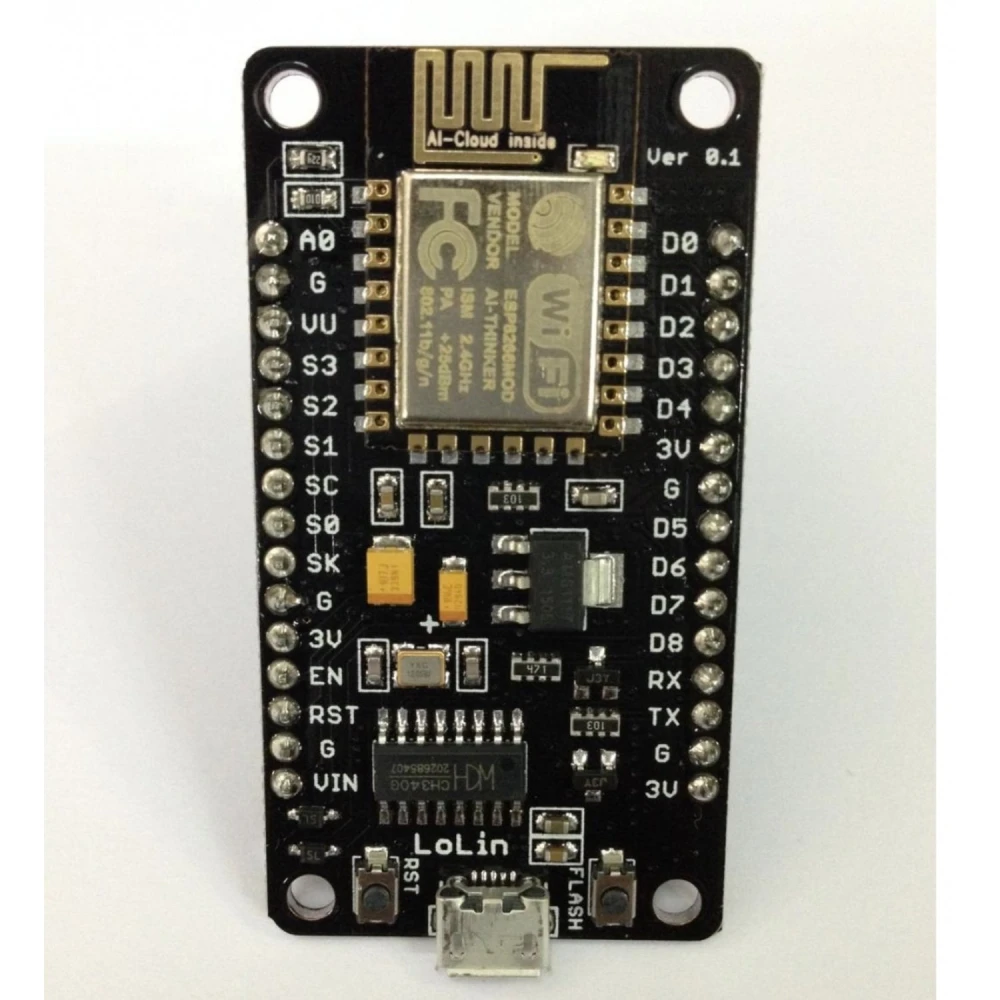
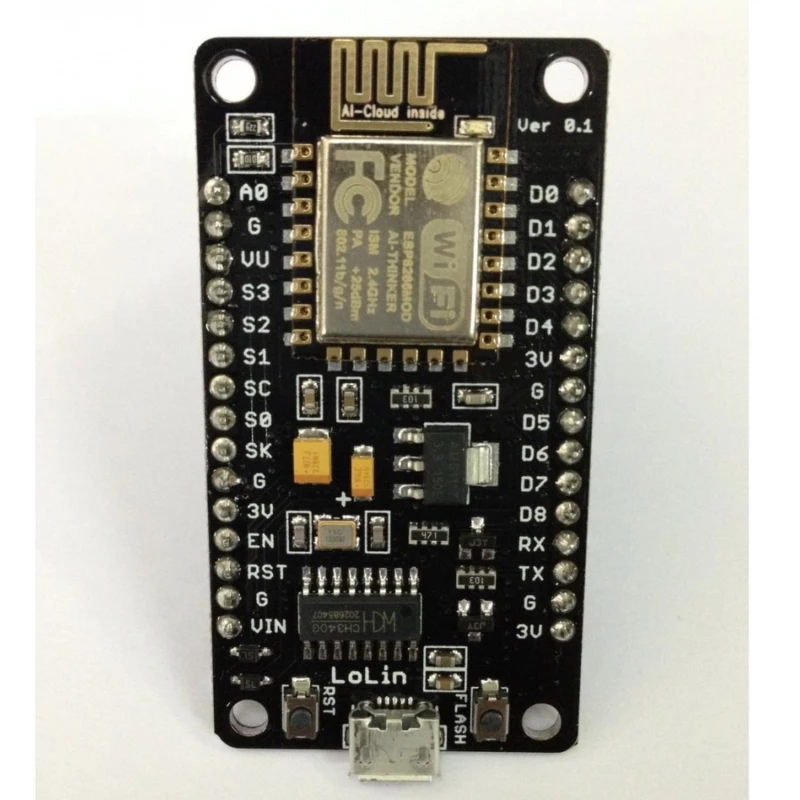
NodeMCU ESP8266 - ESP8266-Based WiFi Development Board for IoT
Brand: satkit
Save 7% Was: 7.38 €
6.89€
VAT included (Ex VAT: 5.60 €)
Volume Discounts
| Quantity | Price | Save |
|---|---|---|
| 2+ | 7.08 € | -4% |
| 10+ | 6.52 € | -12% |
| 20+ | 6.05 € | -18% |
Limited stock
Standard delivery
Thu, Apr 30 - Mon, May 4
Express delivery
Tue, Apr 28 - Wed, Apr 29
30-day returns
Free returns within 30 days
Secure transaction


Share:
Free Delivery
Shipping from €4.99
Easy Returns
30 day return policy
Secure Payment
100% secure checkout
Quality Guarantee
Original products only
The NodeMCU ESP8266 is a development kit based on the ESP8266-12E controller that allows developers and Internet of Things (IoT) enthusiasts to create connected devices easily and affordably. This board integrates a low-power microcontroller with WiFi connectivity, offering a complete solution for projects that require wireless communication.
Thanks to its compact design and USB-Serial interface, the NodeMCU ESP8266 makes programming and connecting with other devices easy without the need for additional components. It features a wide range of GPIO pins that allow you to connect sensors, actuators and other electronic modules to expand its functionality.
Main features:
- 802.11 b/g/n WiFi protocol compatible with Wi-Fi Direct (P2P) and soft-AP.
- Integrated TCP/IP stack to simplify network communication.
- Integrated components: TR switch, balun, LNA, power amplifier, PLL, regulators and power management units.
- Output power of +19.5dBm in 802.11b mode.
- Integrated temperature sensor for internal monitoring.
- Low power consumption with leakage current below 10uA.
- Wake-up and packet transmission time of less than 2 ms.
- Communication interfaces: SDIO 2.0, SPI and UART.
- Low-power 32-bit CPU that can be used as an application processor.
Typical uses:
- Development of IoT devices for home automation, environmental sensors, and automation.
- Projects that require integrated WiFi connectivity and remote control.
- Educational applications and rapid prototyping thanks to its compatibility with Lua and open SDK.
Compatibility and software:
The NodeMCU ESP8266 has a large developer community and documentation available on GitHub NodeMCU. The software is based on Lua, making programming easier for users with different levels of experience.
For USB connection, it is recommended to install the official driver available on the official CH341 website. In addition, there is a detailed installation guide for the driver on Instructables.
This product is ideal for anyone looking for an ESP8266 WiFi development board with advanced features, community support and ease of use for IoT and automation projects.
- Based on the ESP8266-12E module with integrated microcontroller
- 802.11 b/g/n WiFi connectivity with Wi-Fi Direct and soft-AP support
- Large number of GPIO pins for connecting sensors and actuators
- USB-Serial interface for easy programming and communication
- Low power consumption with leakage current < 10uA
- Output power of +19.5dBm in 802.11b mode
- Integrated temperature sensor for monitoring
- Compatible with open SDK and Lua
- Supports SDIO 2.0, SPI and UART interfaces
- Large community and documentation available on GitHub
Customer Questions & Answers
What are the main advantages of the NodeMCU ESP8266-12E compared with other similar WiFi modules?
The NodeMCU ESP8266-12E stands out by integrating a 32-bit microcontroller, 802.11 b/g/n WiFi connectivity and a strong support community. Unlike basic modules such as the ESP-01, the NodeMCU adds a USB-to-Serial interface and a greater number of GPIO pins (up to 11 usable), making development easier. However, it is slightly larger and, although low, its power consumption is higher than WiFi-only modules such as the CC3000.
What is the maximum current it can supply through the GPIO pins without risk of damage?
Each GPIO pin can safely supply up to 12 mA. The total current across all pins together should not exceed 70 mA. Exceeding these limits may degrade the microcontroller or reduce its service life.
What protection measures does it include against voltage spikes, and does it comply with any safety standard?
The NodeMCU does not include active protection against overvoltage on the GPIO lines or the microUSB port. It is not certified to standards such as CE/FCC in itself; for critical applications, external protection should be added and the applicable regulations for each country should be checked.
What is the NodeMCU ESP8266 used for?
The NodeMCU ESP8266 is used to develop Internet of Things (IoT) projects that require WiFi connectivity and remote control through its integrated microcontroller.
Is it compatible with Arduino?
Yes, the NodeMCU ESP8266 can be programmed and used in Arduino-compatible projects, especially to add WiFi connectivity to devices.
What software is used to program the NodeMCU ESP8266?
It can be programmed using the NodeMCU firmware based on Lua, as well as other ESP8266-compatible environments such as Arduino IDE.
Where can I download the USB driver for this board?
The official USB driver is available on the WCH website: https://www.wch.cn/download/CH341SER_EXE.html. It is recommended to always download it from official sources.
What communication protocols does this board support?
It supports 802.11 b/g/n WiFi, Wi-Fi Direct (P2P), soft-AP, as well as SDIO 2.0, SPI and UART interfaces for communication with other devices.
Write a customer review
Customers who bought this item also bought

-2%
Your Recently Viewed Items
-14%

-10%
 NodeMCU ESP8266 - ESP8266-Based WiFi Development Board for IoT
6.89 €7.38 €